The Top 5 Medical Group Governance Mistakes and How to Avoid Them
Sometimes, the most difficult part of a physician practice leader’s job is not facility relationships, compliance, or even billing and reimbursement. It’s managing their colleagues.
To be sure, bad payer behaviors, staffing shortages, and other industry headwinds are putting tremendous pressure on facility-based physician groups. However, at the center of addressing these complex challenges is often a democratically elected board of managers who is charged not only with steering the ship but also with maintaining morale, avoiding mutiny, and ensuring progress on the journey.
The principles of effective group governance provide a framework for medical practice governing bodies, establishing a clear structure for decision-making, accountability, and long-term strategic planning. The most constructive medical groups have a well-defined, well-documented system of governance that dictates how the group will make management decisions, address challenges, adapt to unforeseen circumstances, and ensure the group is optimizing its future.
There are few comprehensive and data driven guides to group governance. Most often, old habits die hard, and skill sets are passed down through tradition. Unfortunately, policies that may have been effective for a group of eight physicians, for example, may become untenable when the group size exceeds 50, or even 100. Critical single points of failure can lead to lost knowledge and skills when key members of the group exit the organization, which can happen for any set of reasons.
If you find yourself in a situation where your group governance is defined by inefficiency, missed opportunities, and in-fighting, it may be time to re-examine your governance policies and approach. These are the top five governance mistakes medical groups tend to make—and what you can do to avoid them.
Mistake 1: Deprioritizing Strategy and Long-Term Planning
The logistics of running a practice actually encompass three different types of governance:
- Clinical governance, setting and monitoring clinical guidelines to maintain the highest level of care delivery.
- Operational governance: overseeing the day-to-day tactical running of a practice. This may involve revenue cycle management, clinical staffing, HR, recruitment, and contracting.
- Strategic governance: The long-term planning necessary to ensure sustainability.
Some groups make the mistake of assigning all three types of governance to one governing body. The result can lead to lack of long-term focus amongst those who are governing. Often, physicians gravitate first toward their primary passion, focusing predominantly on clinical governance. When operational issues emerge and demand attention, they can be prioritized second. With all the oxygen in the room taken up by these two forms of governance, long term strategic planning is often left behind.
The most successful groups ensure that clinical governance is not mixed with group governance, and that strategic governance always has a seat at the table. High-functioning boards should be able to mix the tactical day-to-day running of a group with intermittent long-term planning, ensuring their ship stays afloat and pointed in the right direction.
TIPS TO KEEP BOARD MEMBERS FOCUSED ON THE RIGHT TASKS
Create separate committees. Assign clinical, operational, and strategic governance to the correct parties, and ensure that clinical governance is separate from strategic governance.
Provide board training. An introductory board retreat can help define goals, help train members on tactical effectiveness, and set clear expectations for the work of the strategic governing body. Schedule specialized training as needed to provide context or background information ahead of major decisions, such as the deployment of new technology.
Enlist functional support. A strong revenue cycle management partner can be a practice’s best resource not only for operational assistance but also for strategic guidance. Leverage their scale and expertise to help position your practice for future growth.
Mistake 2: The Wrong Level of Representation
Whether practices realize it or not, internal conflict frequently stems from the decision-making process. Groups are often either too democratic or not democratic enough. Finding the sweet spot is perhaps the greatest challenge of group governance.
True democracies give every owner of the group a voting stake in all decisions. That’s a workable model for very small groups, but it quickly becomes unmanageable as the group expands. Setting conflicting viewpoints aside, even assembling 30 busy physicians to convene a vote is logistically difficult.
The resulting gridlock is extraordinarily detrimental to the practice in many ways. Delays on day-to-day operational decisions have direct financial implications for revenue and reimbursement. Extended debate on major decisions erodes relationships between partners. Board members get frustrated and quickly sour on the leadership experience, which impacts long-term governance prospects. Most critically, facilities lose confidence in the group when they can’t get timely decisions on requests or proposals.
Sometimes, the pendulum can swing the other way. A well-meaning leader emerges as a benevolent dictator as they try to control the chaos and push decisions through. However, managing a group practice in this scenario is like walking a tight rope. If the leader is too strong and begins to make decisions without consensus, mistrust can grow, quickly leading to division.
The most effective system of group governance balances these two extremes. Often, an effective strategy is to operate like a republic, where a small number of elected representatives manage the practice according to the rules outlined in a governance manual and agreed to by the partners. Although board sizes can vary, five to seven board members is generally ideal for medium to large group practices.
TIPS FOR SUCCESSFUL REPRESENTATION
Change the culture. Physicians accustomed to being involved in all decisions may struggle to relinquish the role as the group grows. A strategic consultant can help explain the value of a streamlined voting structure and help secure buy-in from all the partners.
Establish communication channels. Mistrust flourishes when you don’t have transparency between the board and the rest of the partners. Governance manuals should include clear guidelines on how decisions and other board business is communicated out to the group, as well as establish proper channels for providing feedback to the board.
Consider electing board members at-large. Groups often want to structure representation by constituency, with members representing each location, division, or facility. While that does improve communication, it sometimes hinders overall group progress if board members feel obliged to advocate for their constituencies. All board members, elected at-large or not, must view board business through the lens of what’s good for the practice as a whole.
Mistake 3: Undervaluing Leadership Skills
The founding partners may be the heart and soul of a medical group, but they may not be the best leaders to shepherd their practice into the future. At some point, transitions must occur.
Medical groups frequently confer leadership positions based on medical expertise and clinical reputation. While those attributes are tremendous assets to the practice, the associated skills don’t necessarily translate into business acumen, communication skills, or a gift for achieving consensus among peers.
Medical groups should consider outside interests and talents to build well-rounded boards—a tech-savvy physician who can help with the website, for example. They should also ensure the strategic business and leadership skills that will set the group up for future success is well represented.
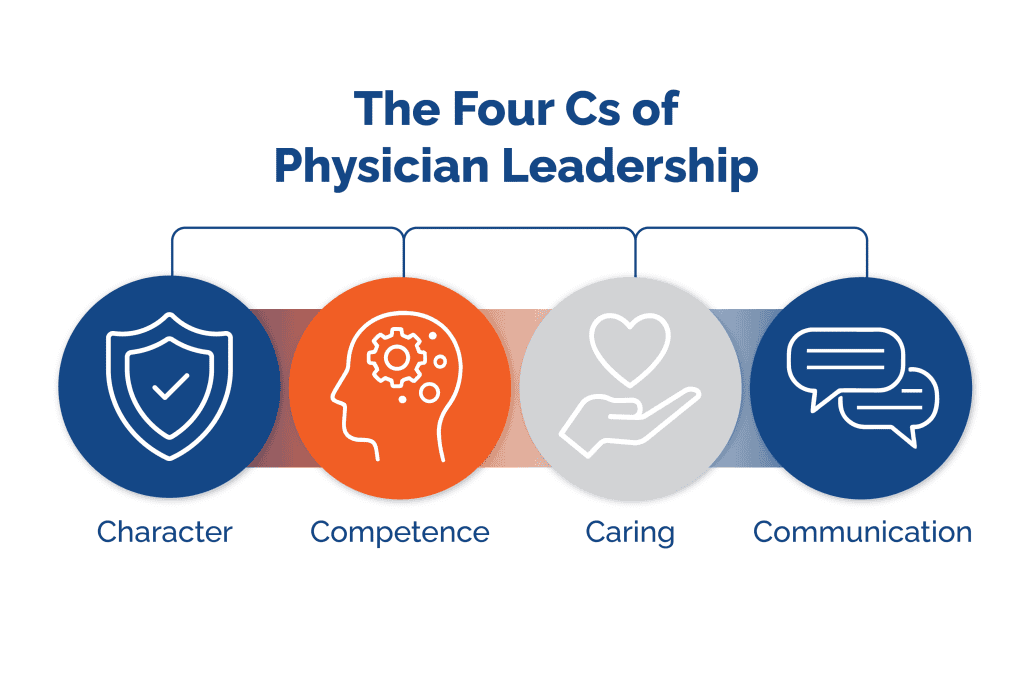
A recent study recognized the value of physician leadership in academic settings and its impact on healthcare delivery and quality. In seeking a model to tie leadership theory to practice, researchers defined the Four Cs of Physician Leadership: character, competence, caring, and communication. Building on the details behind the Four Cs, we add the following specific abilities and characteristics that are essential for medical group strategic governance.
SKILLS AND TALENTS OF STRATEGIC LEADERS
Emotional intelligence. They understand group dynamics, and they can effectively navigate around the underlying relationship issues that lead to conflict or indecision.
Healthcare business knowledge. Leaders fundamentally must understand the mechanics of how physicians get paid and how practices generate revenue. Only then can they make strategic decisions that will lead to long-term sustainability.
A degree of selflessness. Group leaders must be divorced from their own personal interests so they can make decisions in the best interest of the group.
Willingness to learn. Blindness to one’s own deficiencies is a particularly insidious weakness in a medical group leader. The healthcare regulatory, reimbursement, and technology landscapes change rapidly; executive leaders must be open to new approaches and willing to seek external guidance when needed.
Mistake 4: Not Investing in Leaders
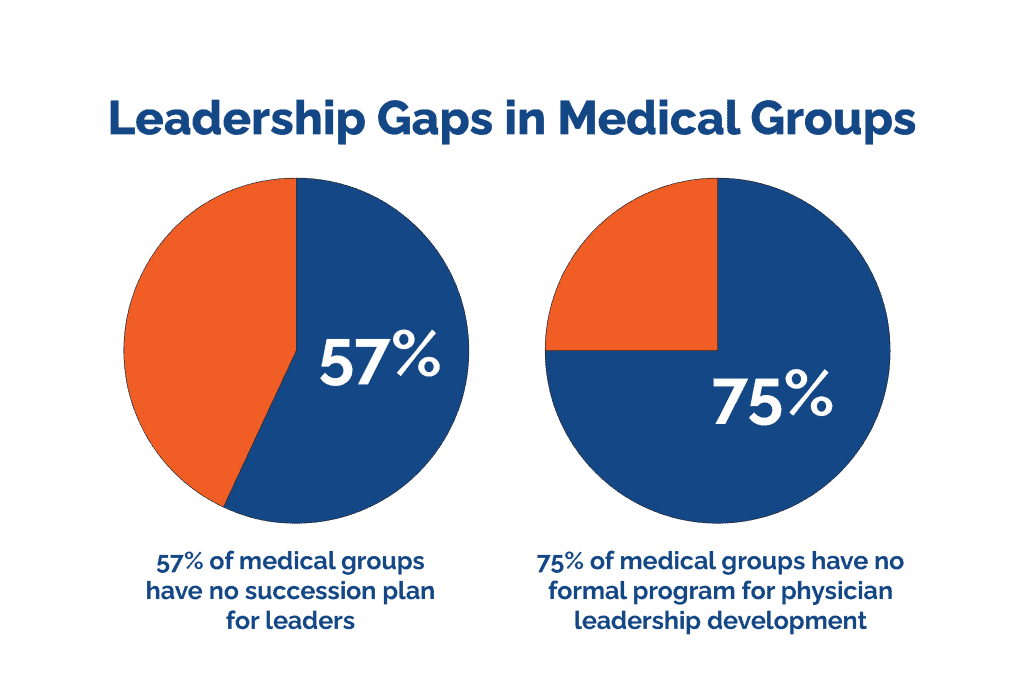
According to recent polling from the Medical Group Management Association (MGMA), 57% of medical groups have no succession plan for leaders and 75% have no formal program for physician leadership development. For these groups, every board vacancy is a fire drill, with partners lobbying and cajoling to fill empty seats in an endless cycle.
Effectively governed groups have a pipeline of members who are preparing to assume leadership positions. This entails more than compiling names on a list. Strategic board members should be actively investing in future leaders, expanding their knowledge and the building skills they will need when it is their turn to serve.
TIPS FOR INVESTING IN FUTURE LEADERS
Encourage advocacy and involvement. Professional organizations, such as the American Society of Anesthesiologists (ASA), are an exceptional training ground for medical group governance. Participation at the regional, state, and national level provides valuable insights into the changing regulatory landscape, as well as a foundational knowledge of physician reimbursement and the issues that may impact revenue. As a first step, you can begin simply by encouraging young physicians and new partners to attend annual meetings.
Encourage health system opportunities. Newer group members interested in ultimately assuming a seat at the group governance table can gain valuable leadership experience in the hallways of the hospitals and ASCs where they work. This can be in the form of clinical leadership, participation in committees like pharmacy and therapeutics & well-being, and medical staff involvement.
Compensate leaders for administrative time. A recent study in JAMA Network Open noted that medical leaders work an average of 14 hours more per week than non-leaders. Board members should be compensated for the extra work—in a measured and purposeful way. The art in crafting leadership compensation policies lies in striking the right balance, paying enough to respectfully reward your colleagues’ dedication but not so much to make the job enticing for the wrong reasons.
Mistake 5: No Framework for Dissent
Group dynamics within a medical practice typically fall along a bell curve: 15-20% are enthusiastic and highly engaged leaders. The middle 60-70% are neutral members, generally content with the direction of the practice and not particularly interested in getting involved. The remaining 15-20% can be detractors, either healthy or unhealthy.
Healthy detractors are constructive, encouraging discussion, fighting complacency, and preventing groupthink from marching everyone down a path that in retrospect was obviously doomed to failure. Unhealthy detractors, however, are like a cancer, rooting doubt, spreading distrust, and ultimately killing the culture of the practice.
Physicians are naturally respectful of each other and tend to be conflict-avoidant, which can lead to difficulty in managing unhealthy detractors. Strong governance documents and empowered leaders help solve the problem, providing a framework of rules and procedures to follow that encourage healthy discussion and minimize destructive disagreement. They must outline how decisions are made, provide avenues to communicate differing opinions, define courses of action to solve disagreements, and spell out consequences for disruptive behavior.
To illustrate the point, governance consultant Will Latham has said that as a dissenting partner you may have three sanctioned options once a decision has been made. You can go along with it, you can gather more information and re-open the discussion, or you can self-select out of the group. But there is no fourth option where you didn’t vote for this outcome, so it doesn’t apply to you.
TIPS FOR MANAGING DISSENT
Get detractors involved. It almost goes without saying that issues look very different from the inside. In the short term, a committee post or an invitation for discussion helps detractors feel heard and can clear gridlock on a key issue. Long term, giving naysayers opportunities to participate may ultimately convert them to constructive supporters as they begin to understand all sides of an issue.
Solicit outside counsel. Dissent sometimes devolves into serious partnership and employment challenges. Engage outside consultants or legal support to ensure your governance policies are sound.
Follow your policies. If your procedures allow three days for partner input before a vote, don’t inadvertently hold the vote on day two. Technicalities like this can unravel the entire system, calling every group policy into question. Even the strongest governance policies can only protect you if they’re consistently followed.
Next Steps
Considered together, the top five governance mistakes also reveal an underlying theme: Groups evolve and needs change, and therefore policies must change. The most effective medical groups view their governance manuals as living documents, regularly updating them to reflect their business needs in real time.
It is critical to give group governance the attention it deserves. With so many industry headwinds demanding time and energy, it can be easy for groups to lose focus on governance. Unfortunately, when groups cannot manage themselves, someone else will step in to fill the void, either a facility or another practice. That puts the whole group at risk.
By prioritizing thoughtful, adaptive governance, your group can stay aligned, resilient, and in control of its own future. With the right support and strategy, effective governance becomes a powerful driver of long-term stability and success.
How Ventra Can Help
Ventra Health can be a valuable resource. As experts in practice management, our teams regularly consult on governance best practices and can help ensure your policies and procedures grow with you. If you want to learn more, reach out to us for a group governance consult.
→ Meet with an ExpertWritten by:

EVP and Chief Commercial Officer

Founder & CEO, Scott Healthcare Consulting, Inc.

About Jason Greenberg, MD
Jason Greenberg, MD, is EVP and Chief Commercial Officer for Ventra Health and a practicing cardiothoracic anesthesiologist. Prior to his role at Ventra, he was President and CEO of Anesthesia Care Associates Medical Group, a large independent medical practice in San Francisco. He has also served as President/CEO of Northern California Anesthesia Physicians and in several clinical leadership roles in the Sutter Health System. Dr. Greenberg serves on multiple committees at the American Society of Anesthesiology, including the Committee for Practice Management, and is a member of the Perioperative Advisory Board of GE HealthCare.

About Shena J. Scott, MBA, FACMPE
Shena Scott, CEO of Scott Healthcare Consulting, Inc., has over thirty (30) years of experience working with anesthesia practices across the country. They have served together for many years on the ASA Committee on Practice Management, which Dr. Greenberg now chairs, as well as more recently serving together on the newly formed ASA Committee on Independently Managed Private Anesthesia Groups (IMPAG).
Connect With Us
Find Out More About Ventra Health
Provide a few details about your needs, and a member of our team will follow up to discuss how we can help.